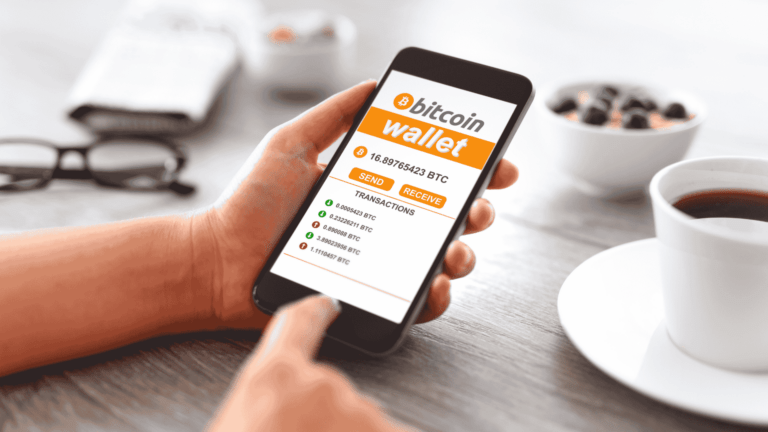
Why your customers want you to accept crypto payments
Global crypto ownership surpassed 560 million users in 2024, with more than 60% of surveyed users expressing interest in using digital currencies for payments. Business adoption is accelerating too: crypto payment use in the US is forecast to grow by over 80% between 2024 and 2026. These numbers reflect a structural shift in how people think about moving value.
So what is driving it? The answer lies not in a single feature but in a combination of needs that traditional payment systems have consistently failed to address.
Key Takeaways
- Over 560 million people now use crypto for payments, and business adoption in the US is projected to grow by more than 80% between 2024 and 2026.
- Users are choosing crypto for nine concrete reasons: privacy, speed, accessibility, self-custody, global reach, fewer intermediaries, 24/7 availability, near-zero fees, and on-chain transparency.
- The Bitcoin Lightning Network addresses the most pressing of these needs: sub-second settlement, fees close to zero, and borderless access.
- For businesses yet to accept crypto payments, the shift is already underway among their customers. The infrastructure to meet that demand is available today.
Reasons to accept crypto payments in your business
1. Privacy and anonymity
Traditional payment systems generate detailed records of every transaction, tied to personal accounts, card numbers, and billing addresses. Crypto transactions, particularly on networks like Bitcoin Lightning, do not require users to share sensitive personal information with merchants. For users who value financial privacy, this is a meaningful differentiator.
2. Instant transactions
Card payments and bank transfers often involve delays, from authorization holds to multi-day settlement windows. Crypto networks, especially Layer 2 solutions like the Bitcoin Lightning Network, process transactions in under a second. For users accustomed to real-time digital experiences, waiting days for a payment to clear is no longer acceptable.
3. Accessible apps
Crypto wallets and payment apps have matured significantly. Many are designed for mobile-first use, with interfaces that require no prior financial knowledge to operate. This accessibility matters particularly in markets where banking infrastructure is limited but smartphone penetration is high. Being able to use crypto for payments makes a difference.
4. Self-custody
With crypto, users can hold and control their own funds without relying on a bank or financial institution to act as custodian. This removes a layer of counterparty risk and gives users direct ownership of their assets. For people in regions with unstable banking systems or currency controls, self-custody is a practical necessity.
5. Global access
Crypto operates without borders. A user in one country can send value to a recipient in another without correspondent banking fees, currency conversion markups, or multi-day processing times. Traditional remittance channels often charge between 5% and 10% per transfer. Using crypto for payments, particularly over the Lightning Network, brings that cost down to near zero. This is one of the most concrete real-world advantages crypto holds over legacy payment infrastructure.
6. Eliminating intermediaries
Every traditional payment involves a chain of intermediaries: issuing banks, acquiring banks, card networks, and payment processors. Each one takes a cut and adds latency. Crypto enables peer-to-peer value transfer, removing unnecessary intermediaries and reducing both cost and friction for users and businesses alike.
7. 24/7 availability
Banks close on weekends. Card networks experience outages. Settlement windows are tied to business hours and banking calendars. Crypto networks operate continuously, 24 hours a day, 7 days a week, 365 days a year. For users who need to move money outside of traditional banking hours, or across time zones, this availability is a direct functional advantage.
8. Lower fees
Transaction fees on traditional payment networks, especially for cross-border or small-value transfers, can be disproportionately high. The Bitcoin Lightning Network processes transactions at fees close to zero, typically fractions of a cent. This makes it viable for high-frequency, low-value transactions that would be economically impossible on legacy rails.
Understanding the technical difference between on-chain Bitcoin and Lightning matters here.
9. Trust and transparency
Blockchain transactions are recorded on a public, immutable ledger. Every transaction can be verified independently, without relying on a bank statement or a third party’s records. For users who have experienced banking errors, fraud, or opaque fee structures, this transparency is a feature, not a side effect.
The pattern behind the reasons
Looking across all nine factors, a common thread emerges: users are choosing crypto for payments because it gives them more control, more speed, and more transparency than the systems they were using before.
Moreover, this is not a niche preference anymore. According to industry data, global retail-led crypto adoption rose by more than 125% between January – September 2024 and during the same period in 2025. The users driving that growth are not primarily investors. They are people using crypto, especially Bitcoin Lightning payments, as a practical tool for moving money.
What this means for your business
ElenPAY is a Lightning Payments Provider that enables businesses to accept crypto payments through production-ready infrastructure: pay-ins, payouts, settlements, and payment orchestration, all delivered via API or embeddable widget. For platforms in iGaming, fintech, and e-commerce, this means meeting your users on the payment rails they are already choosing.
ElenPAY handles the infrastructure so you don’t have to: liquidity, routing, node operations, and regulatory alignment across markets. The shift is already underway, the users are there, and the technology is ready.
Explore how Lightning-powered payments could work for your platform.
Contact our team and book a demo today.
Accept Crypto Payments FAQs
Accepting crypto payments gives businesses access to a growing user base that actively prefers crypto over traditional payment methods. The practical advantages include instant settlement, fees significantly lower than card networks, zero chargebacks, and the ability to reach users in markets where traditional banking access is limited.
The Lightning Network processes payments in under a second at fees close to zero, making it viable for high-frequency and low-value transactions where on-chain Bitcoin would be too slow or too expensive. For businesses, this translates to real-time settlement, no chargebacks, and payment infrastructure that operates 24/7 without dependence on banking hours or card network uptime.
The fastest route is integrating with a Lightning Payments Provider that handles the infrastructure layer. ElenPAY offers API integration and an embeddable payment widget, both designed for production environments. You can contact the ElenPAY team to discuss what integration looks like for your specific platform.